Saint Martin, the children's festival of the North
A hollowed-out beetroot, a candle inside, and children singing in the street at nightfall. This is the 11 November festival nobody talks about.
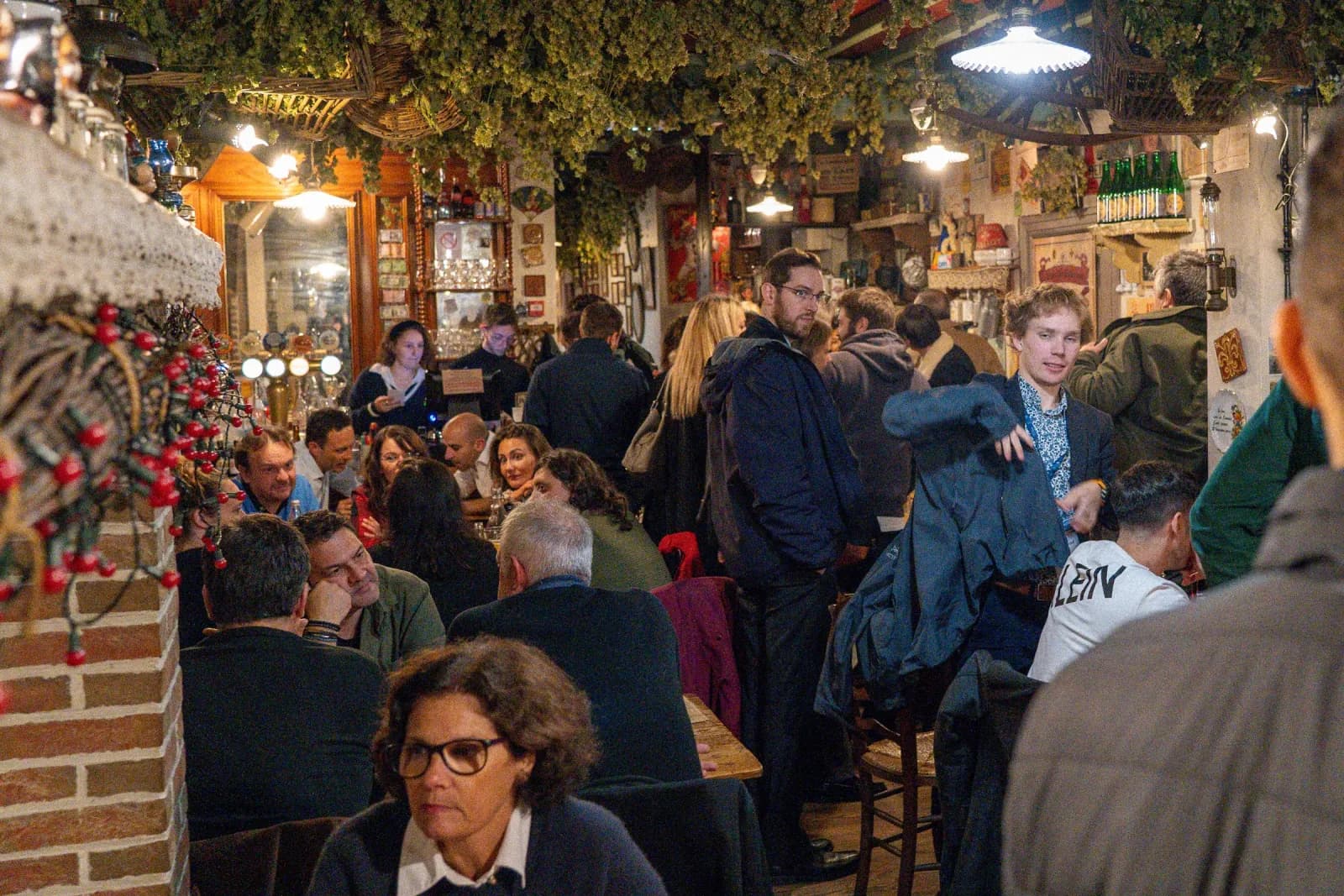
Our own photograph
Published on October 28, 2026
A soldier, a cloak, and a bishop
Martin was a Roman soldier. Before the gates of Amiens, on a winter evening, he cut his cloak in two to give half to a beggar. He later became bishop of Tours, and one of the most popular saints in northern Europe. His feast falls on 11 November.
It is a pivot date in the farming calendar: the harvest is in, leases are renewed, the days are short. The children's festival settled at exactly that point in the year, when night falls early and a lantern makes sense.
Why a beetroot and not a pumpkin
Because it is what grows here. Fodder beet is the northern crop above all others, it is harvested at precisely this season, and it is big and firm enough to be hollowed out, pierced with patterns and carried on a stick.
The gesture is the same as the Halloween pumpkin, and it is far older in this region. Children hollow them out at school or at home, thread them on a string or a handle, and the procession sets off once it is dark.
The procession, and what is sung
The children gather at nightfall, lanterns lit, and cross the village or the neighbourhood singing. In many places a Saint Martin on horseback leads the way. On arrival, buns and sweets are handed out, sometimes hot chocolate.
The songs vary from one town to the next, and that is normal: they pass down through school and family, not through a book. What does not vary is the hour, the darkness, and the fact that it is a children's festival that adults accompany without being its subject.
Where it is still kept
In the villages of inland Flanders, around Dunkirk, and in part of the nearby Belgian Hainaut. Dunkirk and its neighbouring towns hold processions that draw large crowds.
In Lille itself the festival has all but disappeared. It survives here and there, carried by a school or a neighbourhood committee, but a thirty-year-old from Lille stands a good chance of never having heard of it. It is one of those traditions that stopped at the gates of the big city.
What is eaten on the day
Nothing codified, unlike Christmas. People eat what they eat in November in the North: dishes that simmer, carbonade, hochepot, chicons. The bun handed out at the procession is the only pastry attached to the date.
It is also the moment of the year when the menus change. Summer dishes go, the pots come back, and it is the season when an estaminet becomes again what it was made for: a warm place when it is dark outside. The November menus of our eight houses are on the guide to Lille's estaminets.
Autumn dishes, in our houses
The menus change with the season. They are set out in plain text, with prices, on every house page.
See our housesAlso worth reading
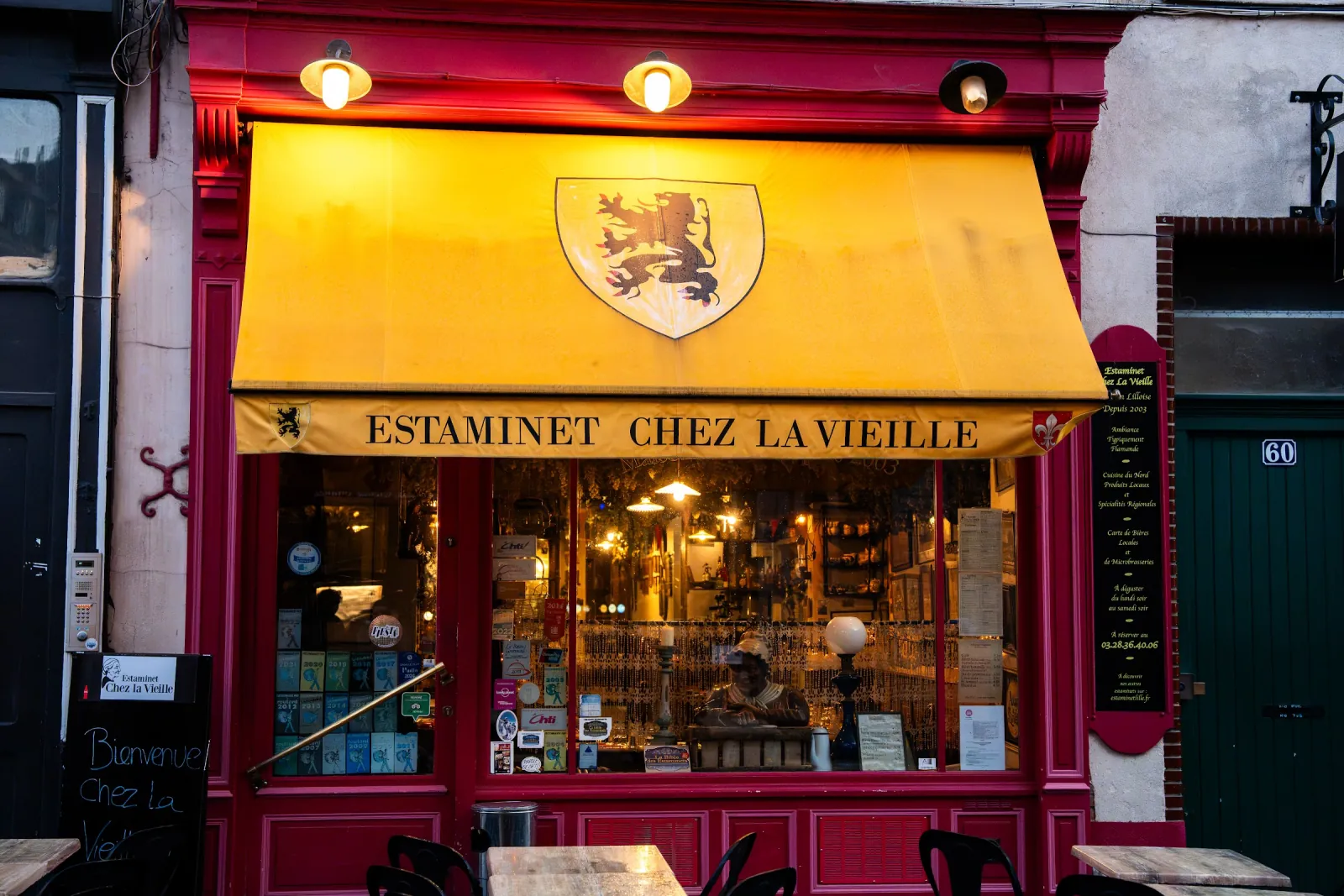
Rue de Gand: three estaminets, three ways to eat Flemish
A cobbled street climbing towards the porte de Gand, brick fronts, and three of our houses a few dozen metres apart. They do not serve the same thing, and that is no accident.
Read more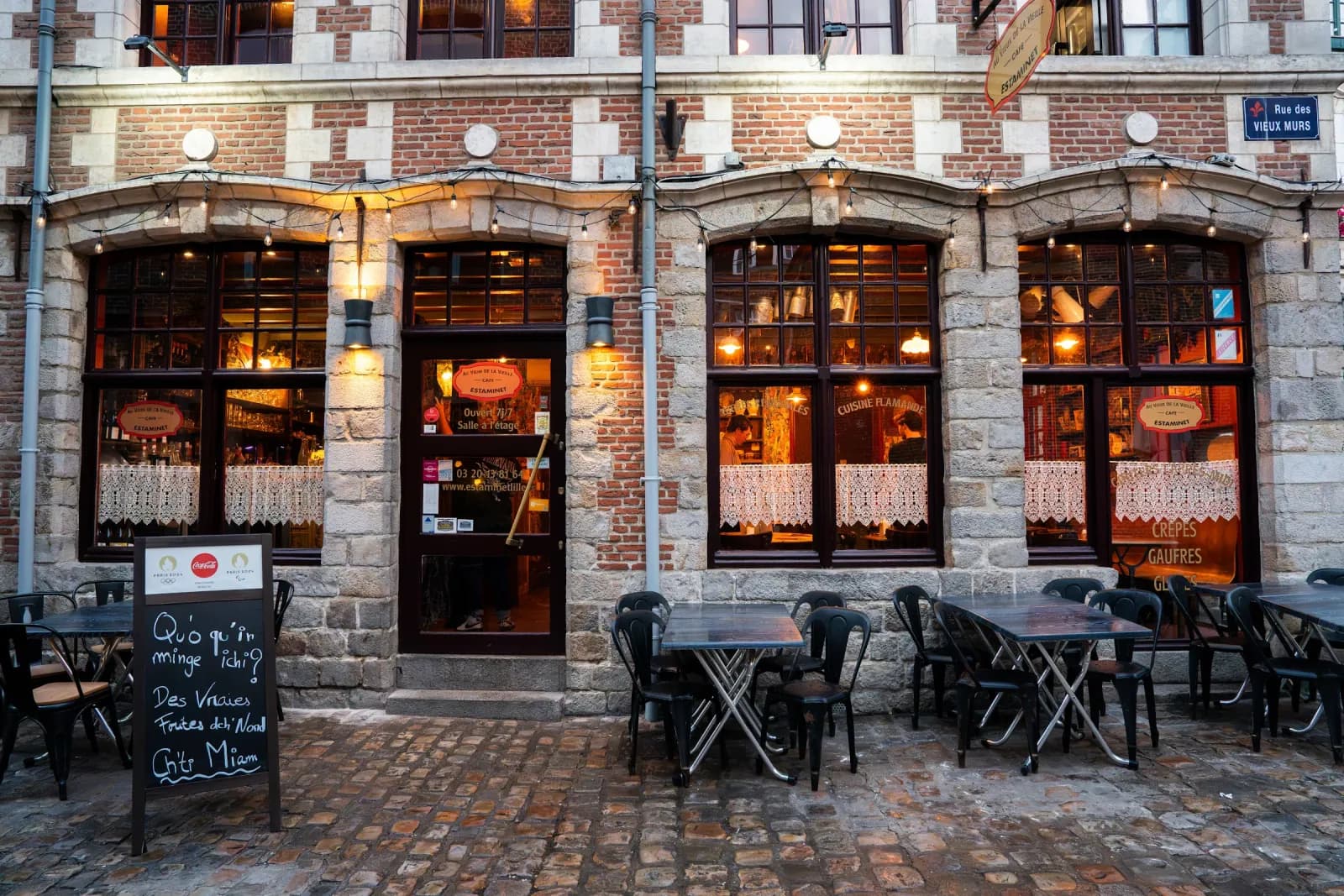
Which estaminet to choose in Lille?
Eight houses, two squares, one street, three villages. This comparison covers only ours, and says so: here is what sets them apart, to choose fast and walk through the right door.
Read moreWhat is an estaminet?
Neither bistro, nor brasserie, nor theme restaurant. The word comes from Flanders, it is three centuries old, and it describes a way of welcoming people before anything else.
Read more