What is an estaminet?
Neither bistro, nor brasserie, nor theme restaurant. The word comes from Flanders, it is three centuries old, and it describes a way of welcoming people before anything else.
Our own photograph
Published on September 4, 2026
A Flemish word, a village story
The word appears in texts in the 17th century, in the Spanish Netherlands, of which Lille was then part. Its origin is still debated: some see the Flemish “stam”, the trunk, the stock, the family gathered around a table; others an old Walloon word for the common room. What is not debated is what it meant: the village café, with its benches, its stove and its landlady.
People came after work in the fields or the mill. They drank a beer brewed at the next farm, played cards or the frog game, talked about the rain and the price of flax. And they ate whatever the house had that day: a soup, a tart, a stew waiting at the edge of the fire. It was not a restaurant. You did not go for a menu, you went because it was there, and because you felt at home.
The estaminet survived where Flanders stayed rural. Around the hills, near Cassel, Godewaersvelde, Hondeghem or Saint-Sylvestre-Cappel, some have never closed. In the cities it had almost vanished when old Lille brought it back to the table from the 1980s onwards, in low houses nobody wanted any more. What you see today on place aux Oignons or rue de Gand descends directly from those country cafés.
How do you recognise an estaminet?
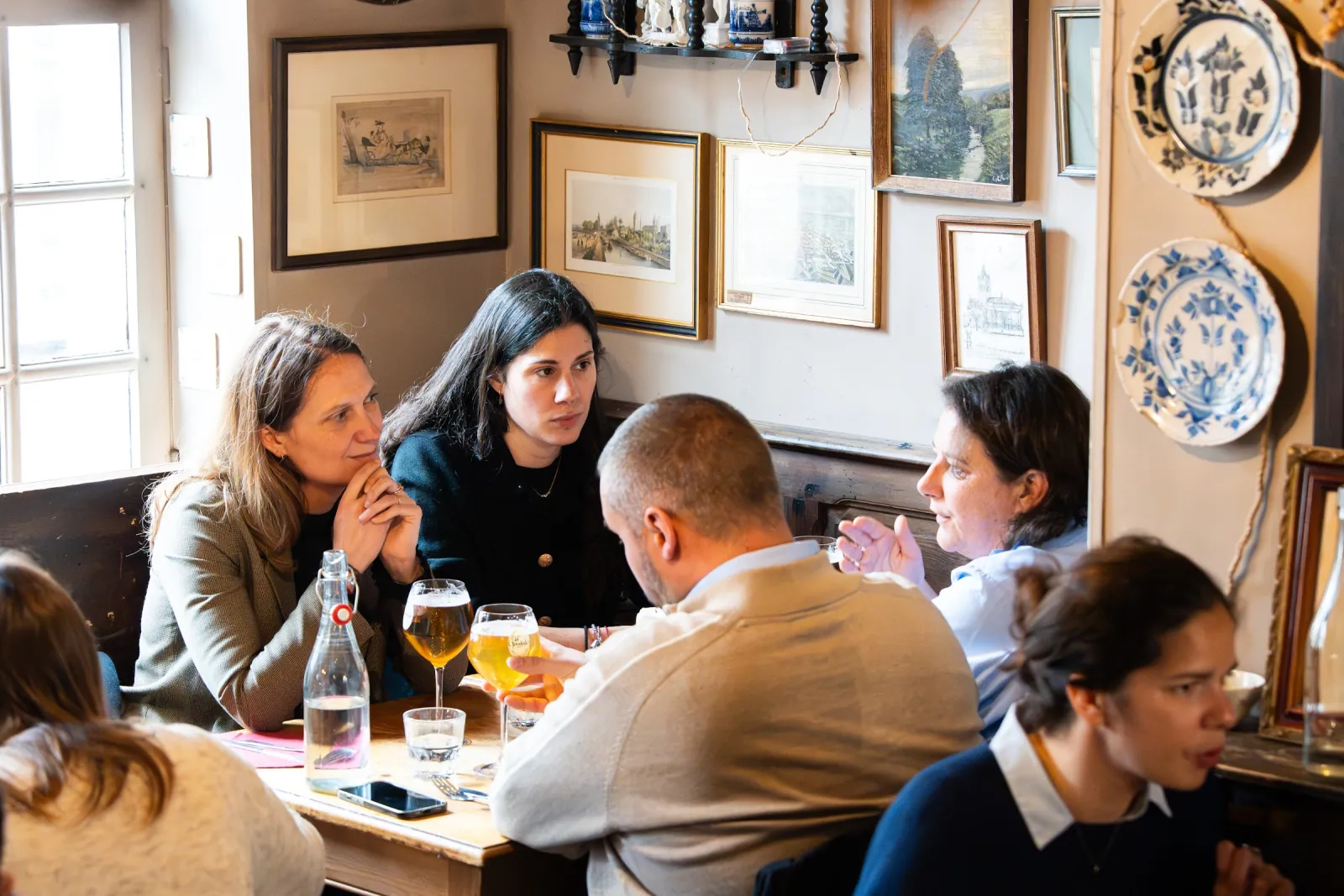
By wooden tables, often shared, and benches rather than armchairs. By old games hung on the wall or set on a shelf: Dutch billiards, the frog game, trou-madame, the spinning-top table. By objects that have no business being there and have always been there, an enamel coffee pot, a chicory advertisement, a coffee grinder, a cast-iron stove. By a short menu, written to be read in a minute, with the dishes of the North and a few beers at the counter.
And by a tone. Nobody calls you “dear customer”. They ask whether it was good, and wait for the answer. Service is frank, quick when it has to be, never hurried when you are not. That, more than the décor, is what separates an estaminet from a restaurant wearing its clothes.
What do you eat there?
Carbonade flamande, slow-cooked in brown beer with mustard-spread gingerbread, with chips for the sauce. Welsh, cheddar melted in beer over a slice of bread and a slice of ham, which Lille adopted so thoroughly that it became a speciality and got a maroilles version. Potjevleesch, a cold terrine of white meats in jelly, which puzzles and then wins you over. Mussels, maroilles flamiche, chicken in beer, sugar tart, chicory crème brûlée, speculoos ice cream.
None of it is complicated. All of it takes time and produce from here: maroilles from the Thiérache, beers from the North and Belgium, potatoes from the plains, chicory from the Cambrésis. In our houses, these dishes are prepared in our kitchens, with fresh chips from the region.
What do you drink there?
Beer, first. Blonde to start, amber with dishes in sauce, brown with the carbonade, white with mussels, tripel or abbey beer to finish when you are not driving. Every estaminet has its taps and its bottles, and a good share comes from less than fifty kilometres away. We say more about it in the beers of the North.
Then genièvre, the grain spirit of Flanders, distilled in Houlle or Wambrechies. Drunk neat and iced, or poured into coffee: that is the bistouille, the miners' breakfast. And chicory coffee, as in every kitchen of the North.
How do you choose your estaminet in Lille?
By numbers: for two, any of our houses; for twelve, you need a big room and you had better book. By the hour: at lunchtime on a weekday you can often walk in; on a Saturday night, in old Lille as elsewhere, you book. By appetite: a welsh, a carbonade, a sharing board or afternoon tea, each house has its own menu and character. To compare, the guide to Lille's estaminets presents them all, with menus and opening hours.
What an estaminet is not
It is not a museum: the objects are there because they bring back memories and get people talking, not only for the photograph. It is not a Parisian brasserie: nobody hands you the wine list with ceremony. It is not a theme restaurant: the menu does not play at folklore, it serves what people here really eat on Sundays with the family.
Eight houses, from old Lille to the sea
Long tables, slow-cooked dishes, welsh, a counter, the seaside: pick yours by mood, the menu and prices are on every page.
See our housesAlso worth reading
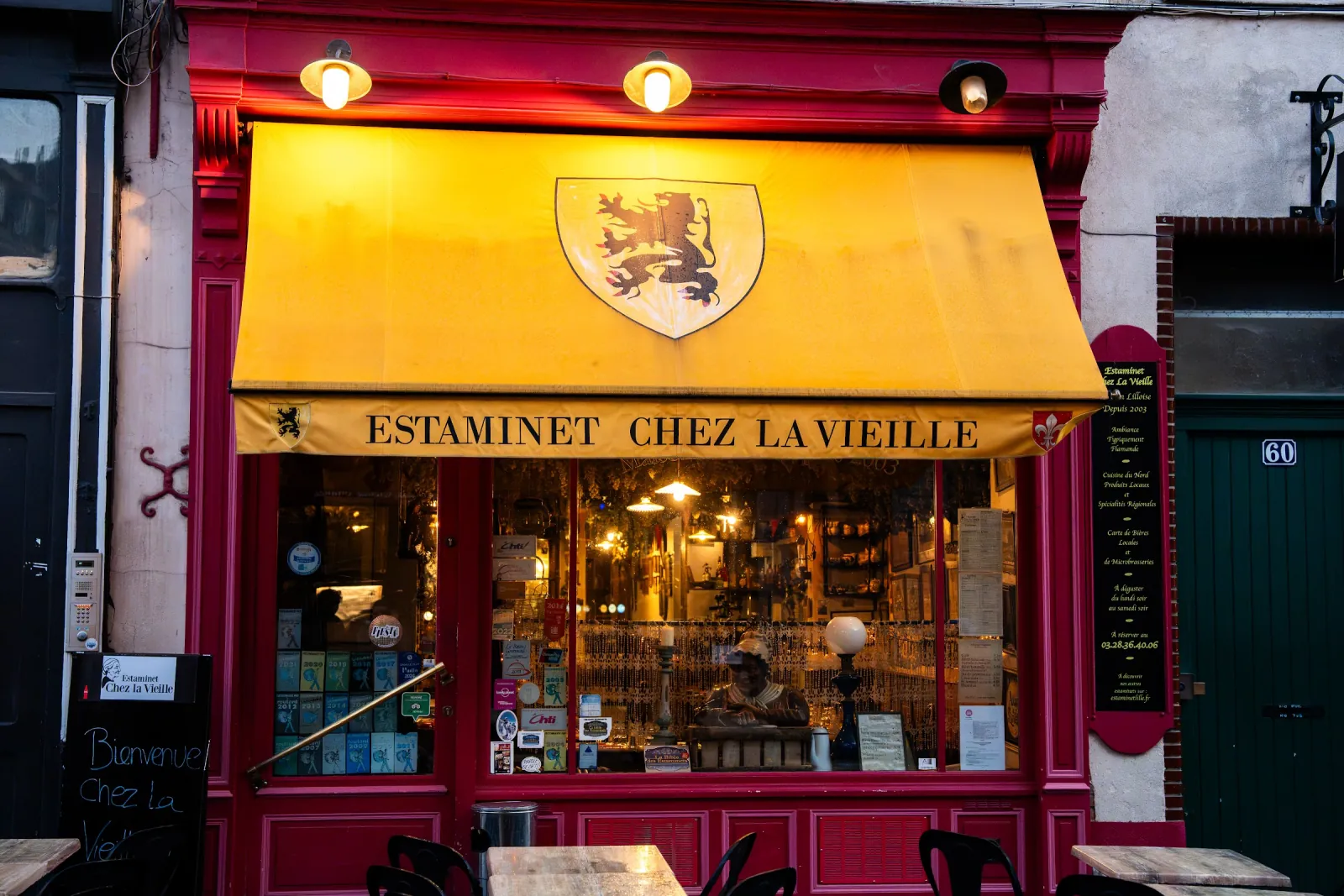
Rue de Gand: three estaminets, three ways to eat Flemish
A cobbled street climbing towards the porte de Gand, brick fronts, and three of our houses a few dozen metres apart. They do not serve the same thing, and that is no accident.
Read more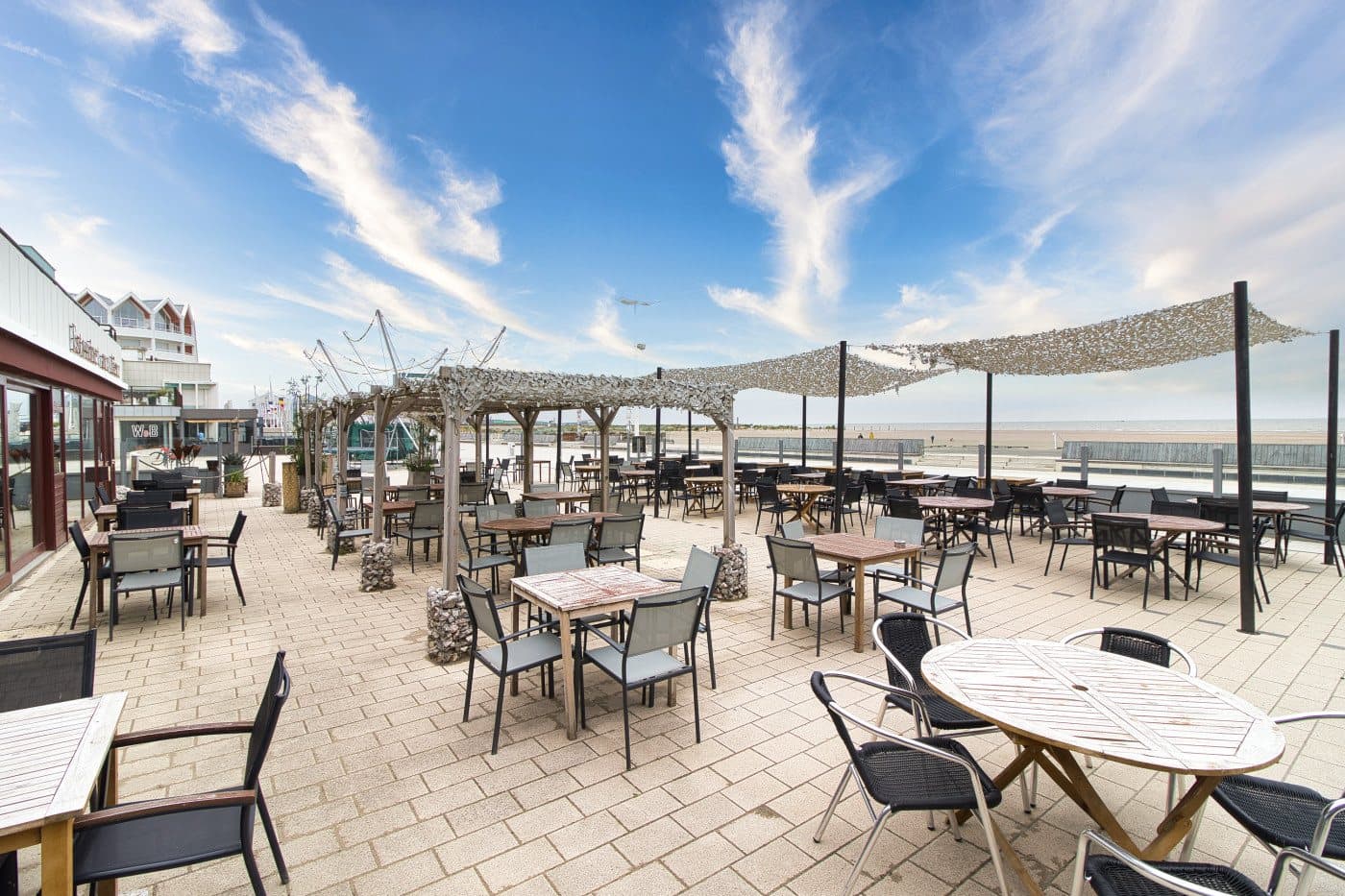
Saint Martin, the children's festival of the North
A hollowed-out beetroot, a candle inside, and children singing in the street at nightfall. This is the 11 November festival nobody talks about.
Read more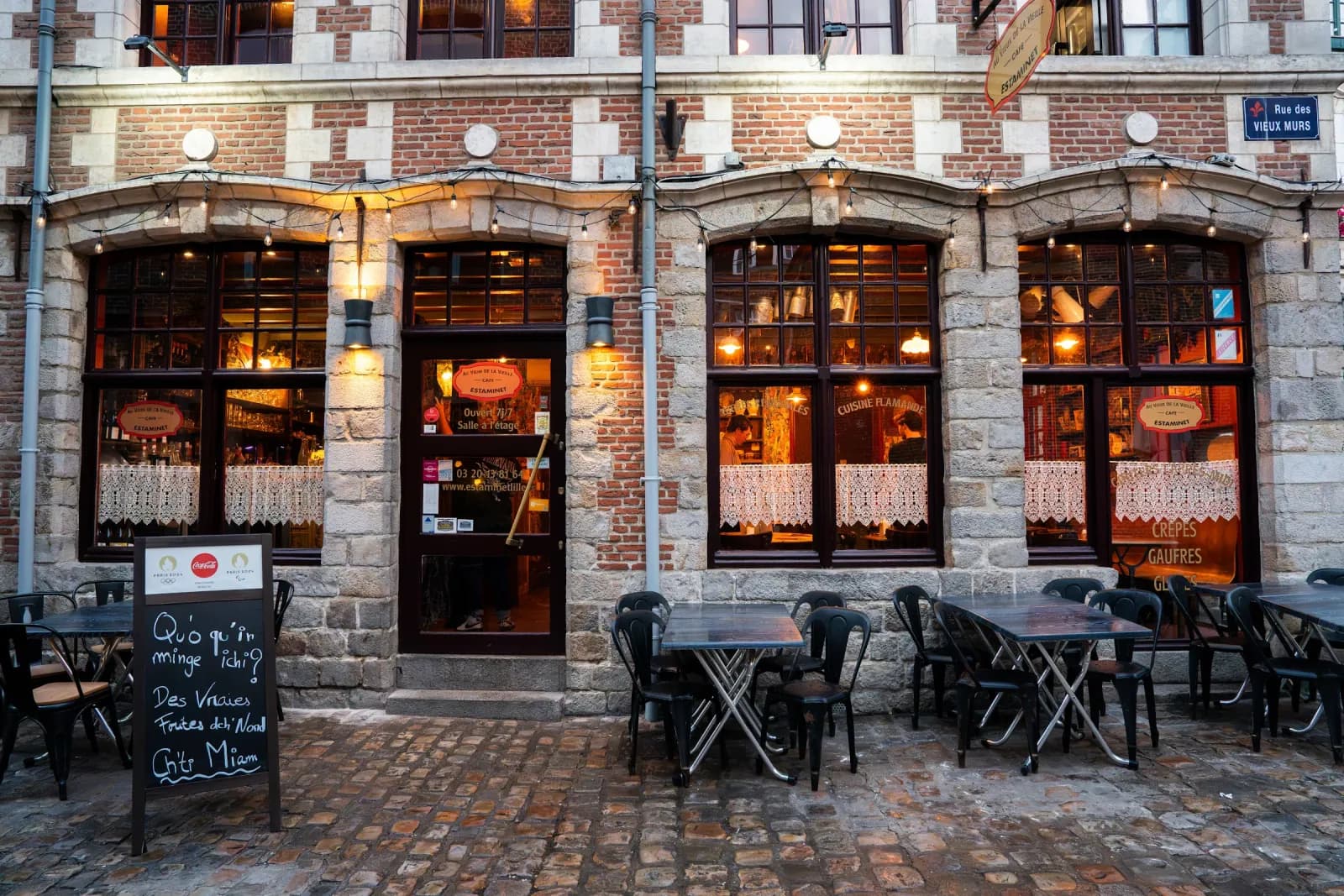
Which estaminet to choose in Lille?
Eight houses, two squares, one street, three villages. This comparison covers only ours, and says so: here is what sets them apart, to choose fast and walk through the right door.
Read more