Old Lille on foot, from place aux Oignons to rue de Gand
An hour's walk, four of our houses along the way, and enough to understand why this district brought the estaminet back to the table.
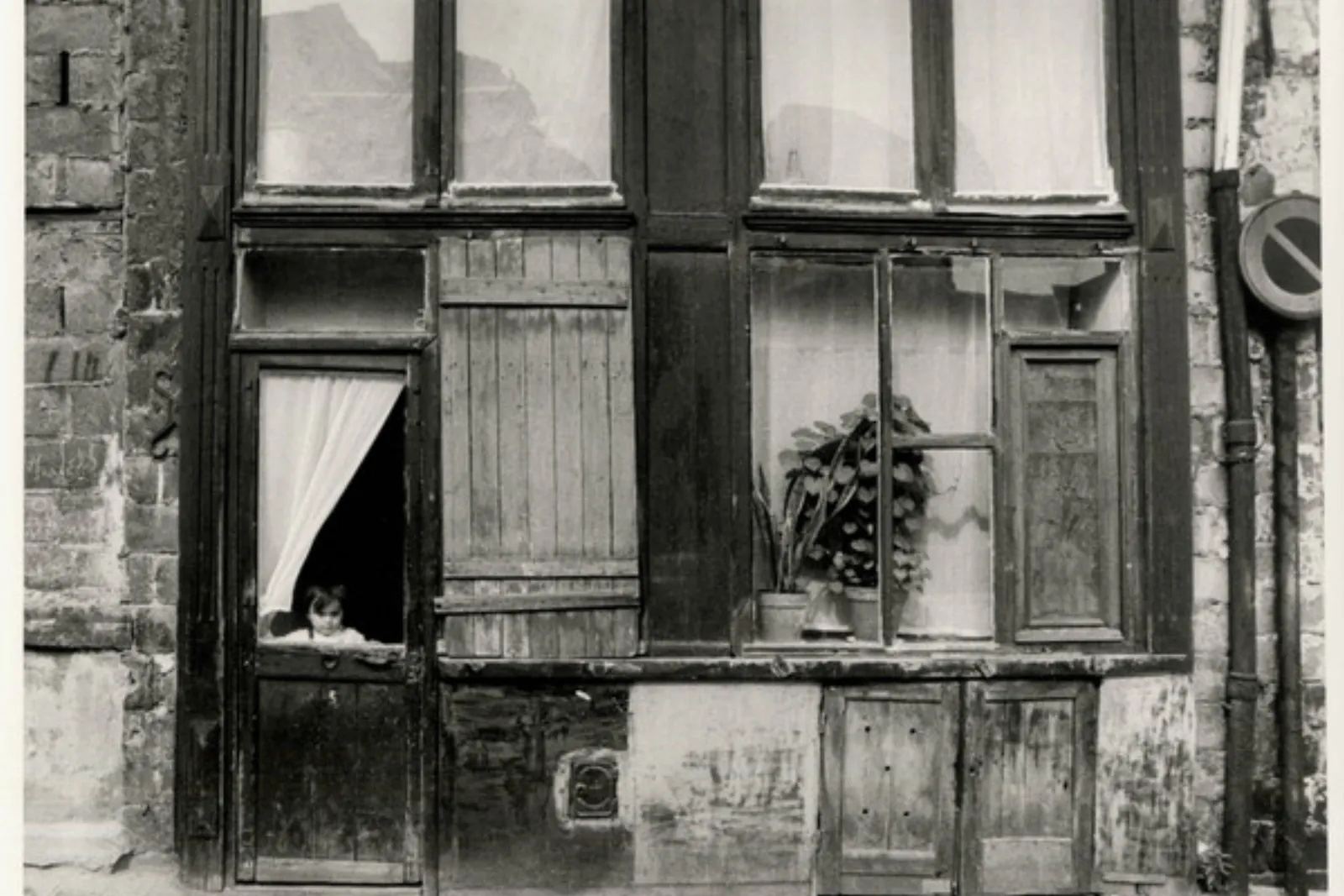
Archive photograph
Published on September 4, 2026
Where to start?
At place aux Oignons. The name owes nothing to onions: it is a corruption of “donjon”, the keep of the castle of the counts of Flanders that stood here by the Deûle before the city covered it. The square is small, cobbled, lined with low 17th-century houses that nearly vanished in the 1970s, when the district was falling into ruin. Au Vieux de la Vieille occupies one of them, Au Petit Vieux another, opposite. It is the historic heart of the district, and the heart of our story.
Rue de la Monnaie, Hospice Comtesse
Go down rue de la Monnaie, named after the workshop where the counts' coins were struck. At number 32, the Hospice Comtesse: founded in 1237 by Joan, Countess of Flanders, rebuilt after a fire in the 15th century, it cared for the city's poor until the Revolution. Now a museum, it keeps its sick ward, its chapel and its blue-tiled kitchen. Allow half an hour if you go in, five minutes if you look at the courtyard from the street.
The cathedral Lille took a century and a half to finish
A detour along rue Basse and its façades of brick and white stone, the style called Flemish here: red brick, limestone, carved cartouches above the windows. Then Notre-Dame-de-la-Treille, begun in 1854 in the medieval taste, left without a façade for a century, and closed in 1999 by a veil of translucent marble that glows pink from inside when the sun is on it. You love it or you hate it, but you do not forget it.
Rue de Gand
Rue de Gand is the street of estaminets, where the district found its table again in the 1980s and 1990s. Chez la Vieille at number 60, La Vieille France at 51, L'Estaminet du Welsh at 45: three of our houses within a hundred metres of each other, in 17th-century houses with vaulted cellars. At the end, the porte de Gand, built in 1620 under the Spanish, marks the end of old Lille and the start of Vauban's city. Climb onto the rampart: the view over the roofs is worth the steps.
Where to stop?
At lunchtime, Chez la Vieille, La Vieille France or the Welsh, a hundred metres apart on rue de Gand: three menus, three moods. In the evening, come back to place aux Oignons: the district lights up, the terraces fill, and the carbonade is waiting.
How long to allow?
An hour's walk without going in anywhere, two hours with the Hospice Comtesse, half a day with lunch. The cobbles are uneven: good shoes. And on Sunday morning old Lille is almost empty, which is the best time to see it. The addresses, menus and hours of our five Lille houses are on the guide to Lille's estaminets.
Eight houses, from old Lille to the sea
Long tables, slow-cooked dishes, welsh, a counter, the seaside: pick yours by mood, the menu and prices are on every page.
See our housesAlso worth reading
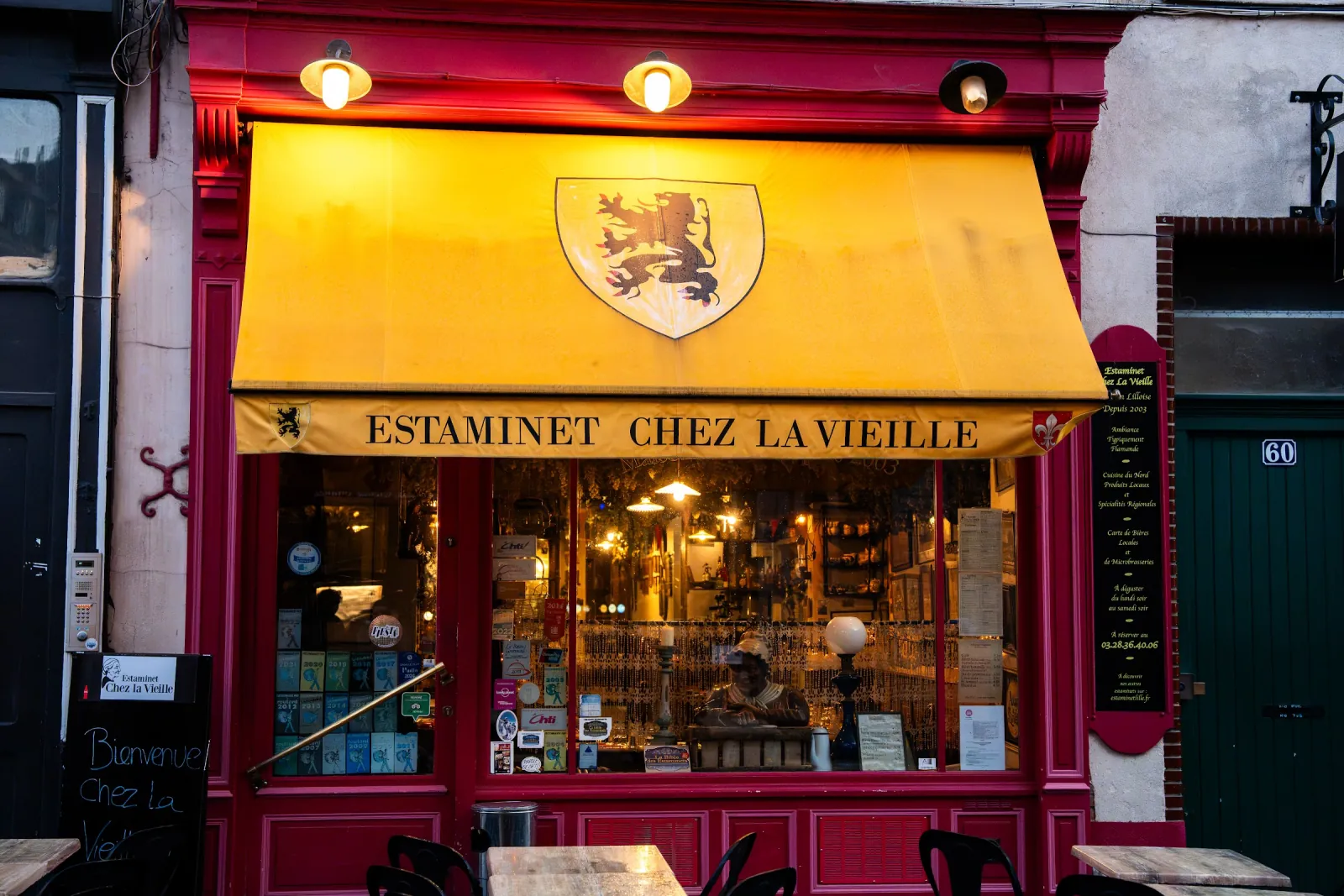
Rue de Gand: three estaminets, three ways to eat Flemish
A cobbled street climbing towards the porte de Gand, brick fronts, and three of our houses a few dozen metres apart. They do not serve the same thing, and that is no accident.
Read more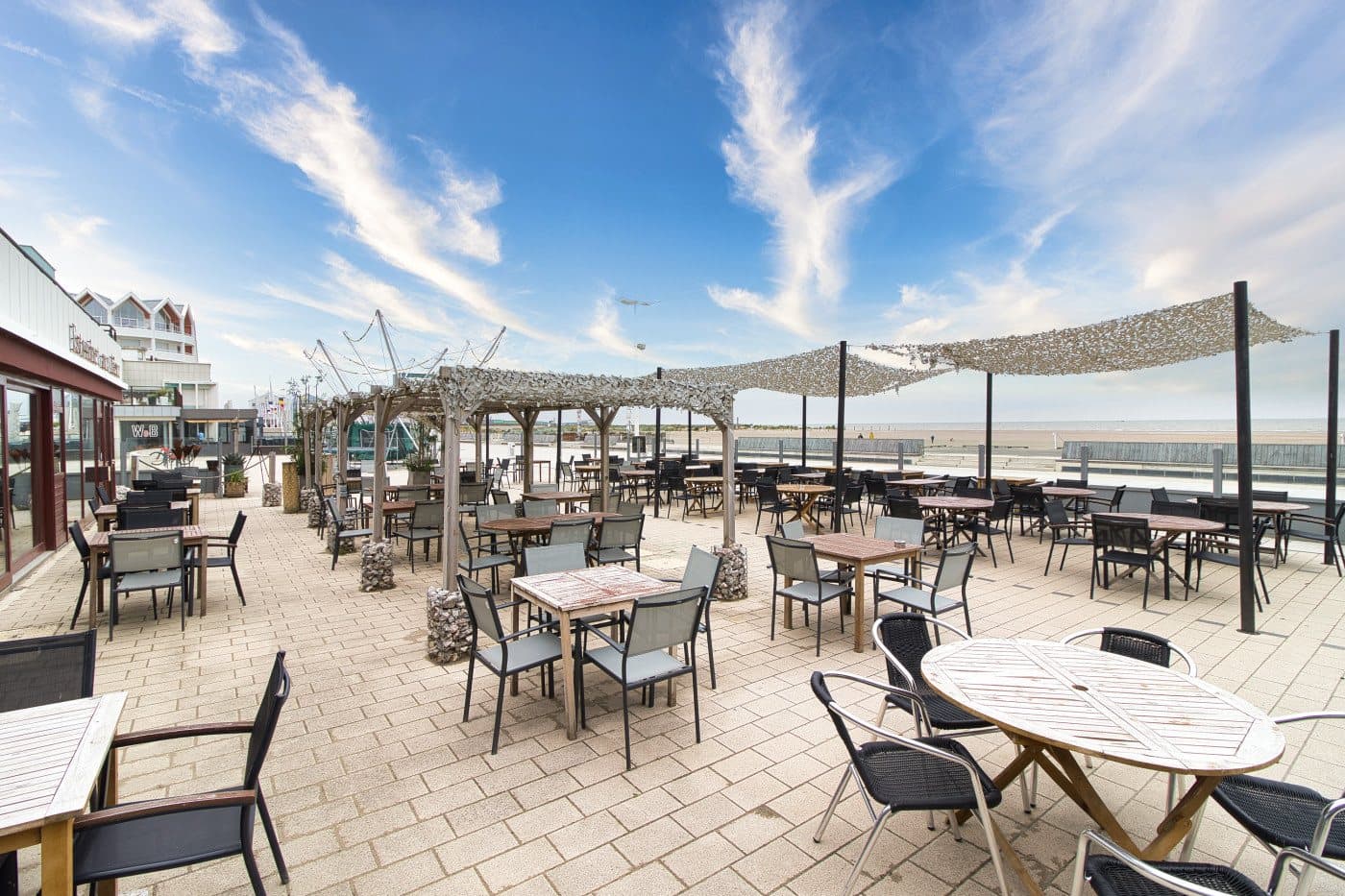
Saint Martin, the children's festival of the North
A hollowed-out beetroot, a candle inside, and children singing in the street at nightfall. This is the 11 November festival nobody talks about.
Read more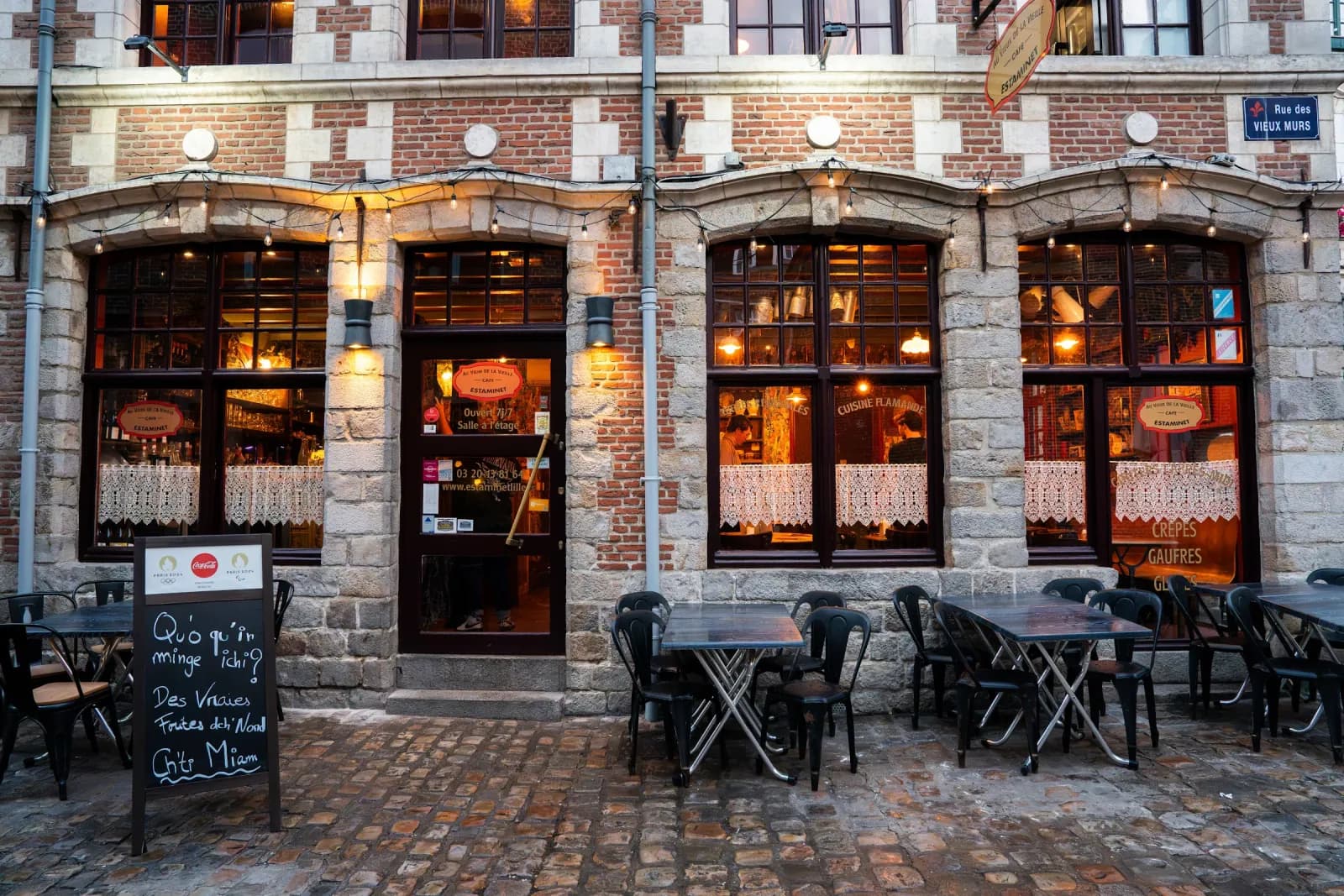
Which estaminet to choose in Lille?
Eight houses, two squares, one street, three villages. This comparison covers only ours, and says so: here is what sets them apart, to choose fast and walk through the right door.
Read more