Carbonade flamande, what really goes in it
Beef, brown beer, onions, mustard-spread gingerbread and time. The rest is up to each house.
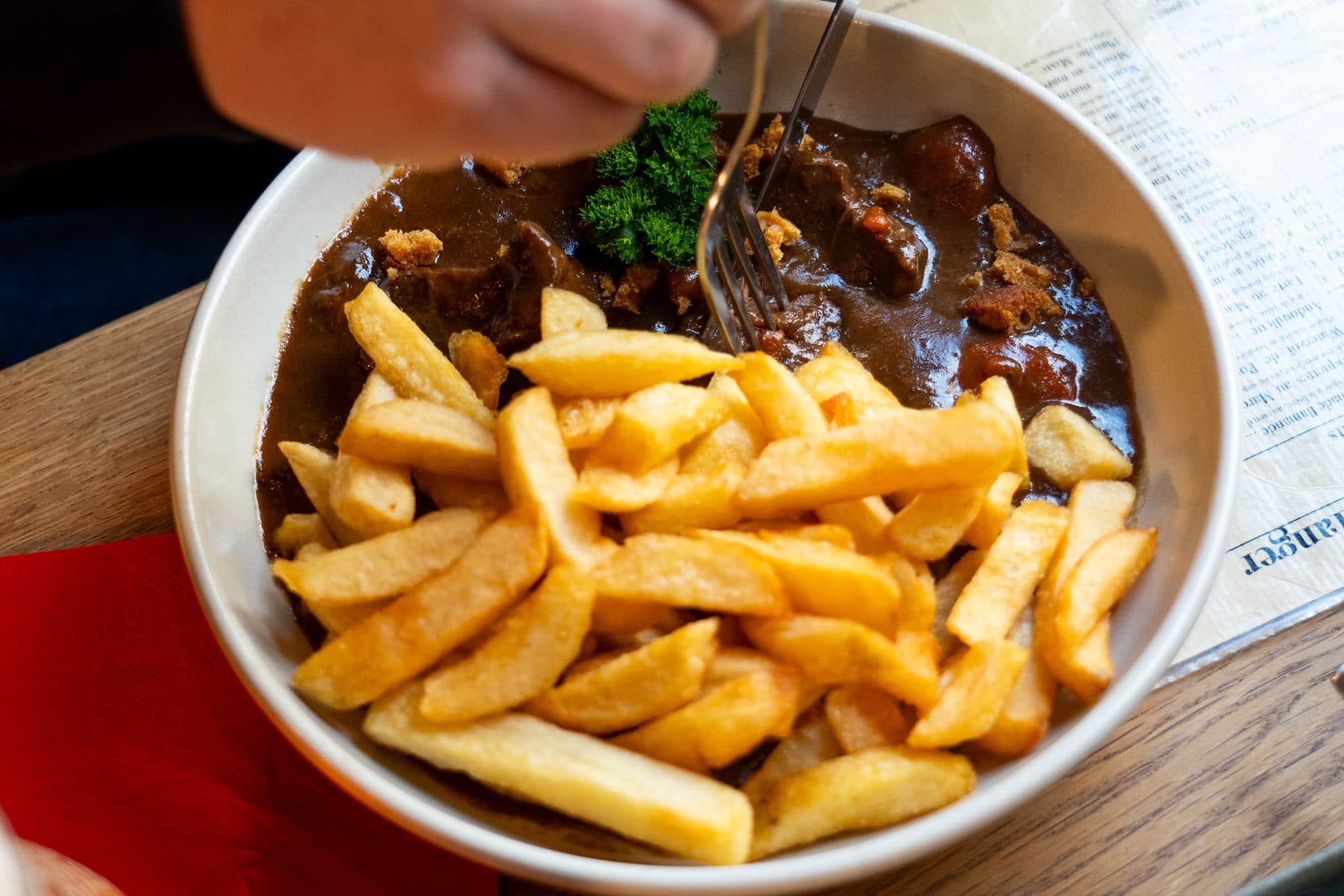
Our own photograph
Published on September 4, 2026
The weekday dish
Carbonade is to Flanders what boeuf bourguignon is to Burgundy: a beef stew in which wine is replaced by what is to hand, here beer. The word comes from coal. Carbonade first meant meat grilled over embers, and the North, which had mines and no vineyards, turned it into a slow-cooked dish, brown as coal itself.
It is a dish of workers and farmers. You started it in the morning before leaving, it waited at the edge of the fire, and it was better the next day. Flemish cookbooks have recorded it for centuries, under various spellings, and it crossed the border without a passport: Belgium claims it as much as we do.
What goes into a carbonade flamande?
Braising beef, chuck, cheek or shin, cut large, because a small piece dries out. Onions, plenty, melted slowly until sweet. A brown beer, never a light blonde: you need body and a little bitterness, and the beer used for cooking is often the one you drink with it. Brown sugar, or vergeoise, for balance.
And the signature of the North: a slice of gingerbread spread with mustard, laid on the meat at the end of cooking. It melts, binds the sauce, and brings sweetness and heat at the same time. Some add a dash of vinegar, others thyme and bay, others still a carrot. Many thicken with flour, a few let the gingerbread do it alone. There are as many carbonade recipes as there are northerners, and each defends their own.
How long does it take?
Three hours at least, on a low flame, covered. The meat must fall apart under the fork without insistence, and the sauce must coat without sticking. It is a dish that keeps well and often gains from waiting: many northerners will tell you a carbonade is better the next day.
What makes the difference
A brown beer, which gives colour and taste. Long cooking, which softens the meat and darkens the sauce. Vergeoise rather than white sugar. And fresh chips, which hold the sauce. A carbonade is judged by its sauce and its chips, in that order.
What to serve it with?
Fresh chips, for the sauce. A brown or amber beer. A little salad, for a clear conscience. And dessert is negotiable.
Where to eat a carbonade in Lille?
In an estaminet, of course. All eight of our houses serve it, each in its own way: the one at Au Vieux de la Vieille, place aux Oignons, and the one at Chez la Vieille, rue de Gand, are the most asked for. The other six are on the guide to Lille's estaminets.
Eight houses, from old Lille to the sea
Long tables, slow-cooked dishes, welsh, a counter, the seaside: pick yours by mood, the menu and prices are on every page.
See our housesAlso worth reading
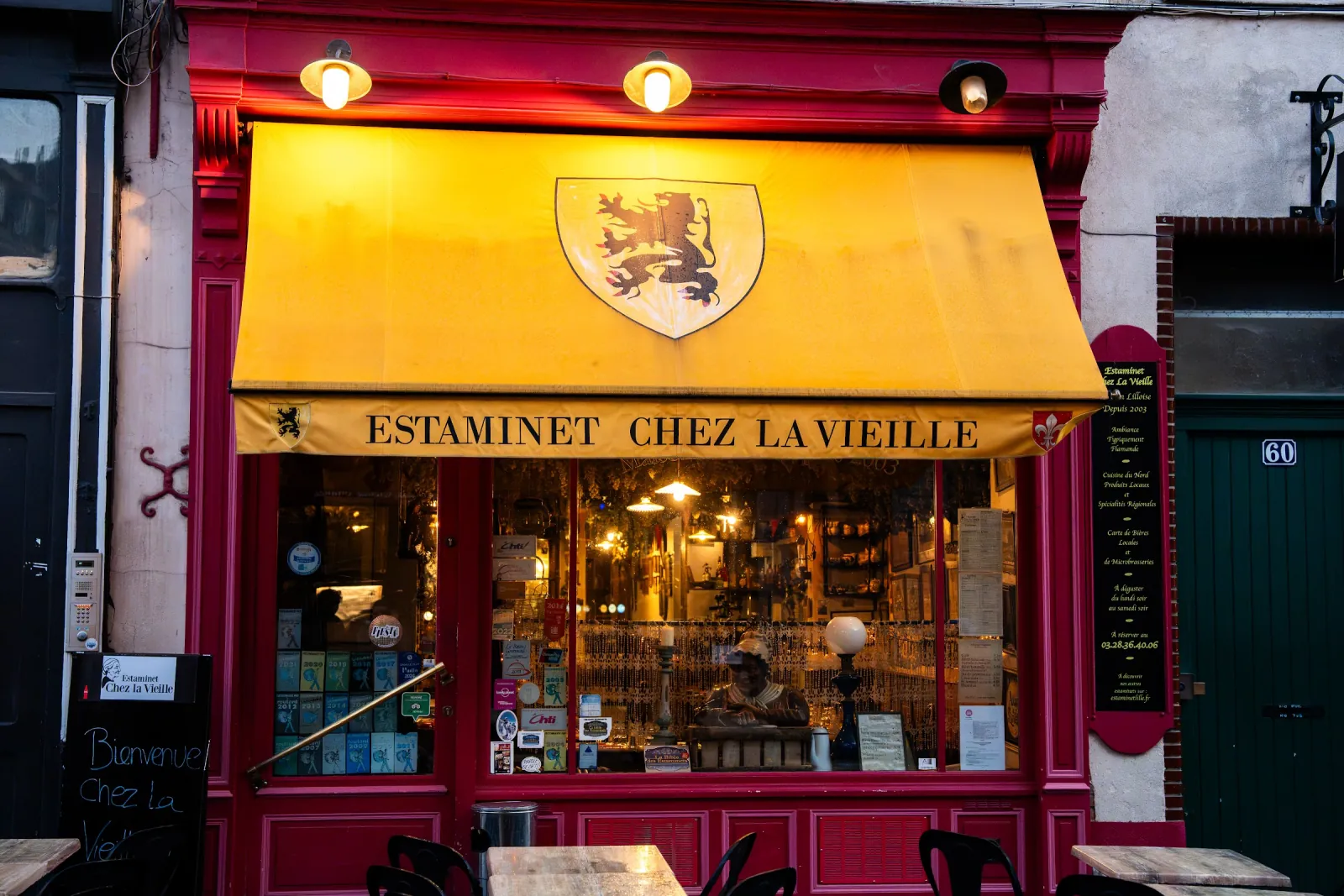
Rue de Gand: three estaminets, three ways to eat Flemish
A cobbled street climbing towards the porte de Gand, brick fronts, and three of our houses a few dozen metres apart. They do not serve the same thing, and that is no accident.
Read more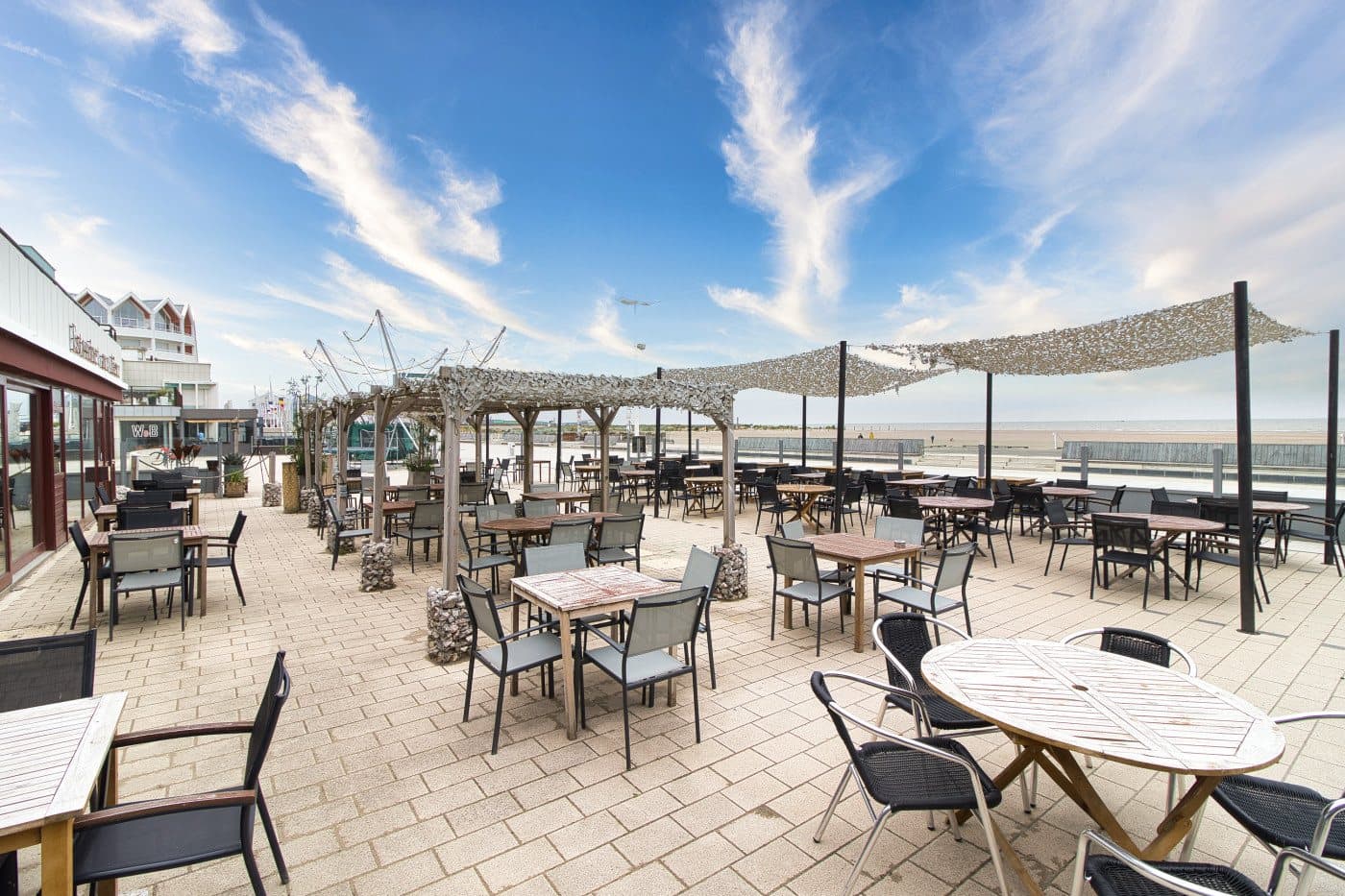
Saint Martin, the children's festival of the North
A hollowed-out beetroot, a candle inside, and children singing in the street at nightfall. This is the 11 November festival nobody talks about.
Read more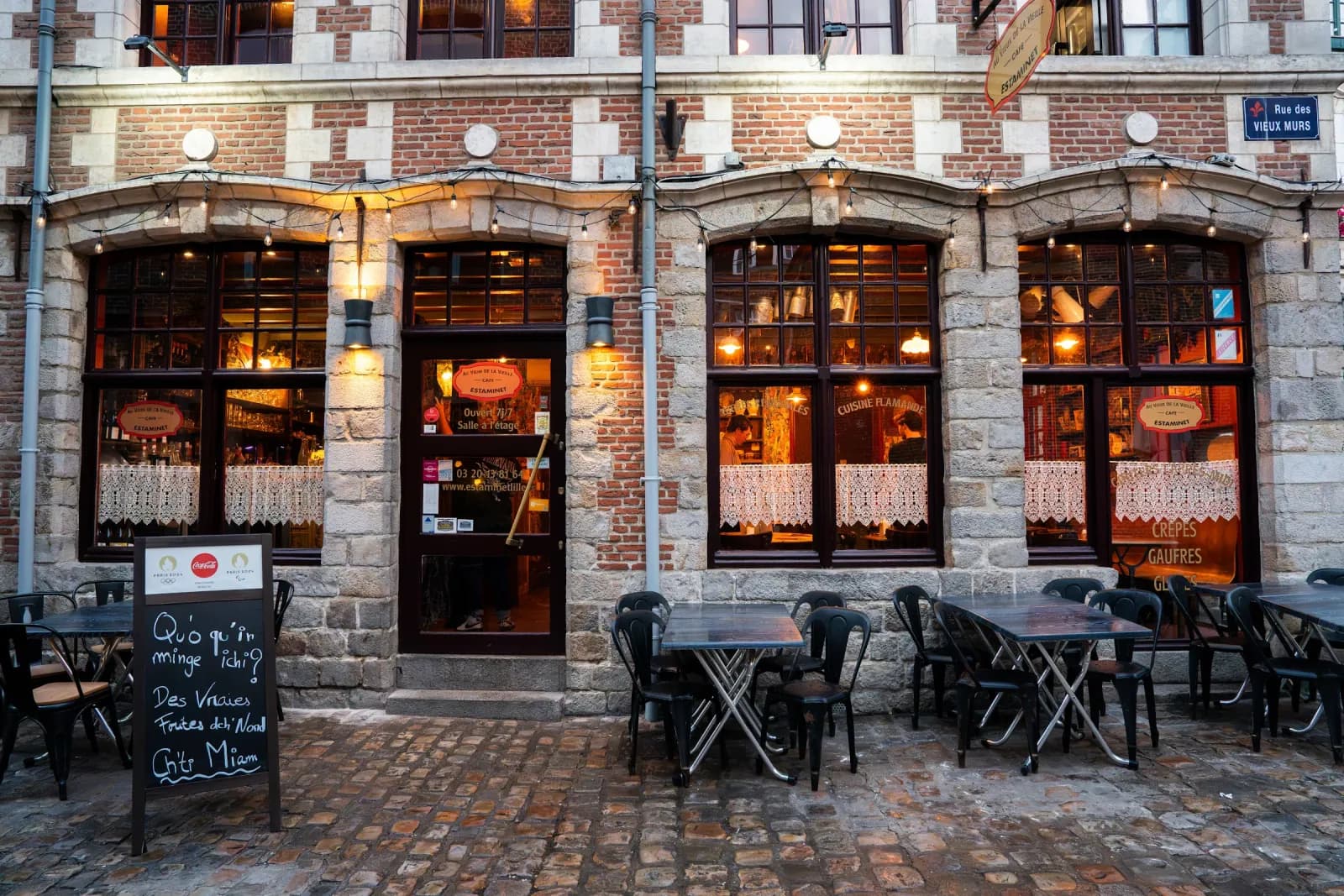
Which estaminet to choose in Lille?
Eight houses, two squares, one street, three villages. This comparison covers only ours, and says so: here is what sets them apart, to choose fast and walk through the right door.
Read more