The welsh, from Wales to old Lille
A Welsh dish, adopted by the North, reinvented with maroilles on place aux Oignons. And a house devoted to it, on rue de Gand.
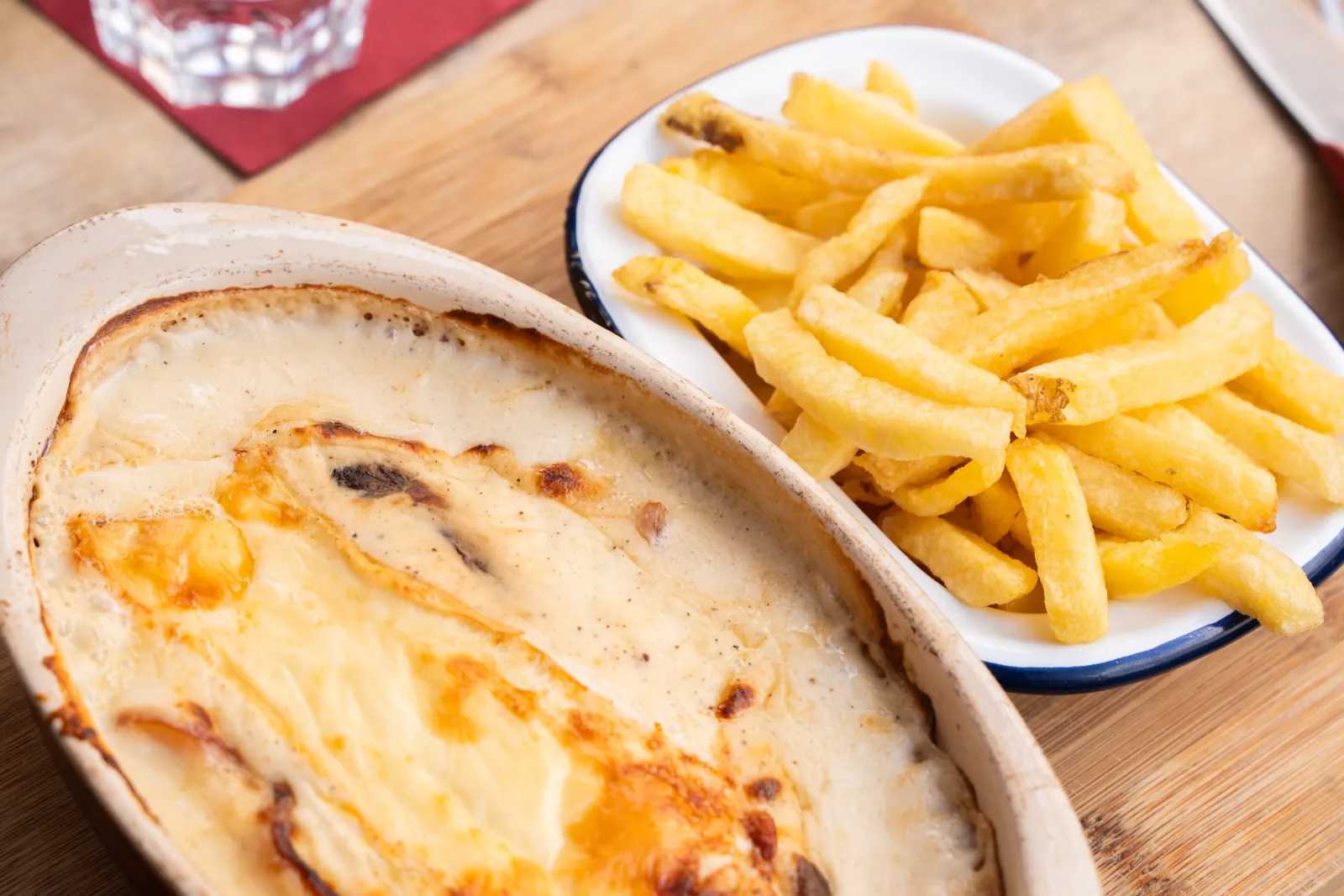
Our own photograph
Published on September 4, 2026
Where does the welsh come from?
Welsh rarebit is Welsh, and old: 18th-century English books list it under the mocking name “Welsh rabbit”, because the Welsh, it was said, had no rabbit to put on their bread. Cheddar melted in beer, sharpened with mustard, poured over toast and grilled. A pub dish, not a dinner-table one.
It reached northern France with the British, somewhere between the mining companies of the 19th century and the trenches of 1914, when the coalfield worked with the English and drank like them. The cafés of Lille, Lens and Béthune kept it when the English left. Today a Welsh tourist ordering a welsh in Lille does not quite recognise their own.
What the North changed
A slice of ham under the cheese, first, and often a fried egg on top: the welsh became a full meal. Chips on the side, naturally. Then came maroilles. It was at Au Vieux de la Vieille, on place aux Oignons, that cheddar was replaced by the cheese of the Thiérache, stronger, creamier, more local. The maroilles welsh is now served all over the North, and it was born there.
How is a welsh made?
The cheese melts gently in blonde beer, with a little mustard and sometimes a dash of Worcestershire sauce. It must neither boil nor go stringy: too hot, it splits; too cold, it pulls threads. You soak the bread in beer, toast it, lay the ham, pour the cheese into a gratin dish and put it in the oven until the top browns. Served scalding, in its dish, with chips, which are there to mop up the sauce.
Which welsh to choose?
With cheddar, as in Wales, for a sensible first time. With maroilles, as in old Lille, for a first time you will not forget. With an egg, to make it a meal. As a burger, or in a vegetarian version: on rue de Gand, L'Estaminet du Welsh offers several, and serves almost nothing else. The best advice is still the waiter's: ask for today's.
Welsh and beer: which with which?
A blonde with cheddar, so as not to smother the cheese. An amber with maroilles, which stands up to it. A white if you took the egg. And water on the side, because a welsh is salty and there is speculoos for dessert. Our guide to northern beers says more.
Where to eat a welsh in Lille?
In most of our houses it is on the menu, with cheddar or with maroilles. The specialist remains L'Estaminet du Welsh, 45 rue de Gand. All our addresses, with menus and opening hours, are on the guide to Lille's estaminets.
Eight houses, from old Lille to the sea
Long tables, slow-cooked dishes, welsh, a counter, the seaside: pick yours by mood, the menu and prices are on every page.
See our housesAlso worth reading
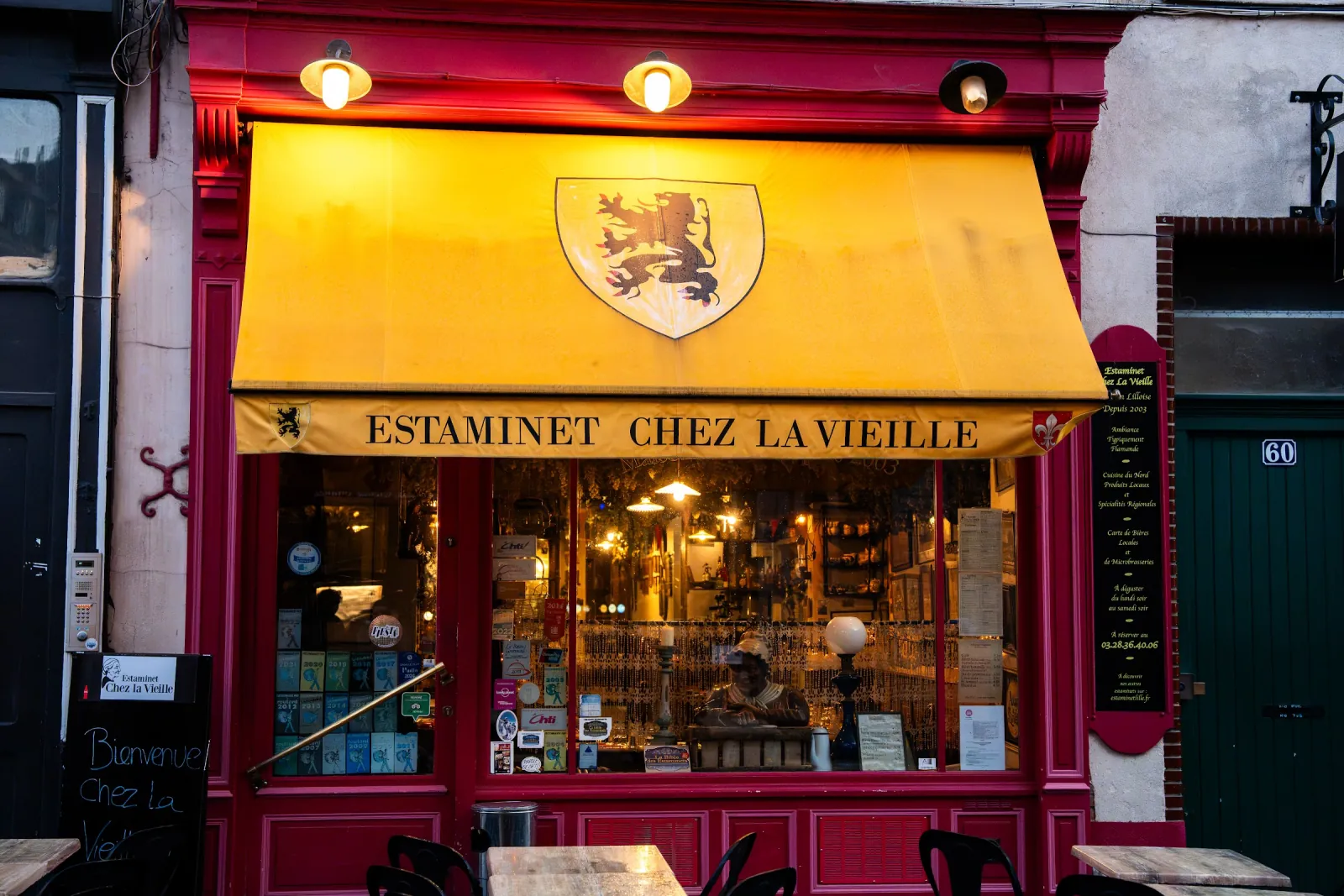
Rue de Gand: three estaminets, three ways to eat Flemish
A cobbled street climbing towards the porte de Gand, brick fronts, and three of our houses a few dozen metres apart. They do not serve the same thing, and that is no accident.
Read more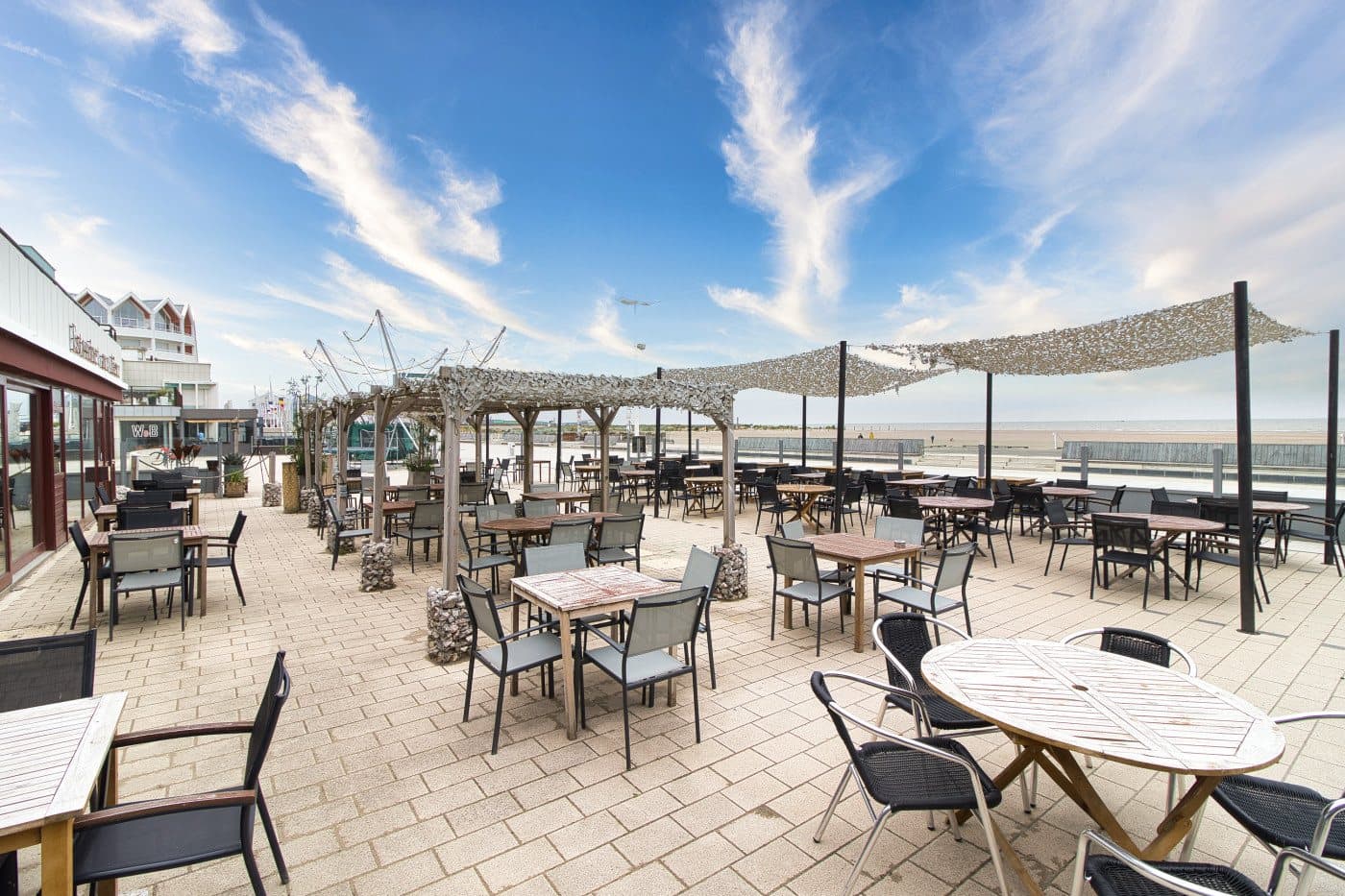
Saint Martin, the children's festival of the North
A hollowed-out beetroot, a candle inside, and children singing in the street at nightfall. This is the 11 November festival nobody talks about.
Read more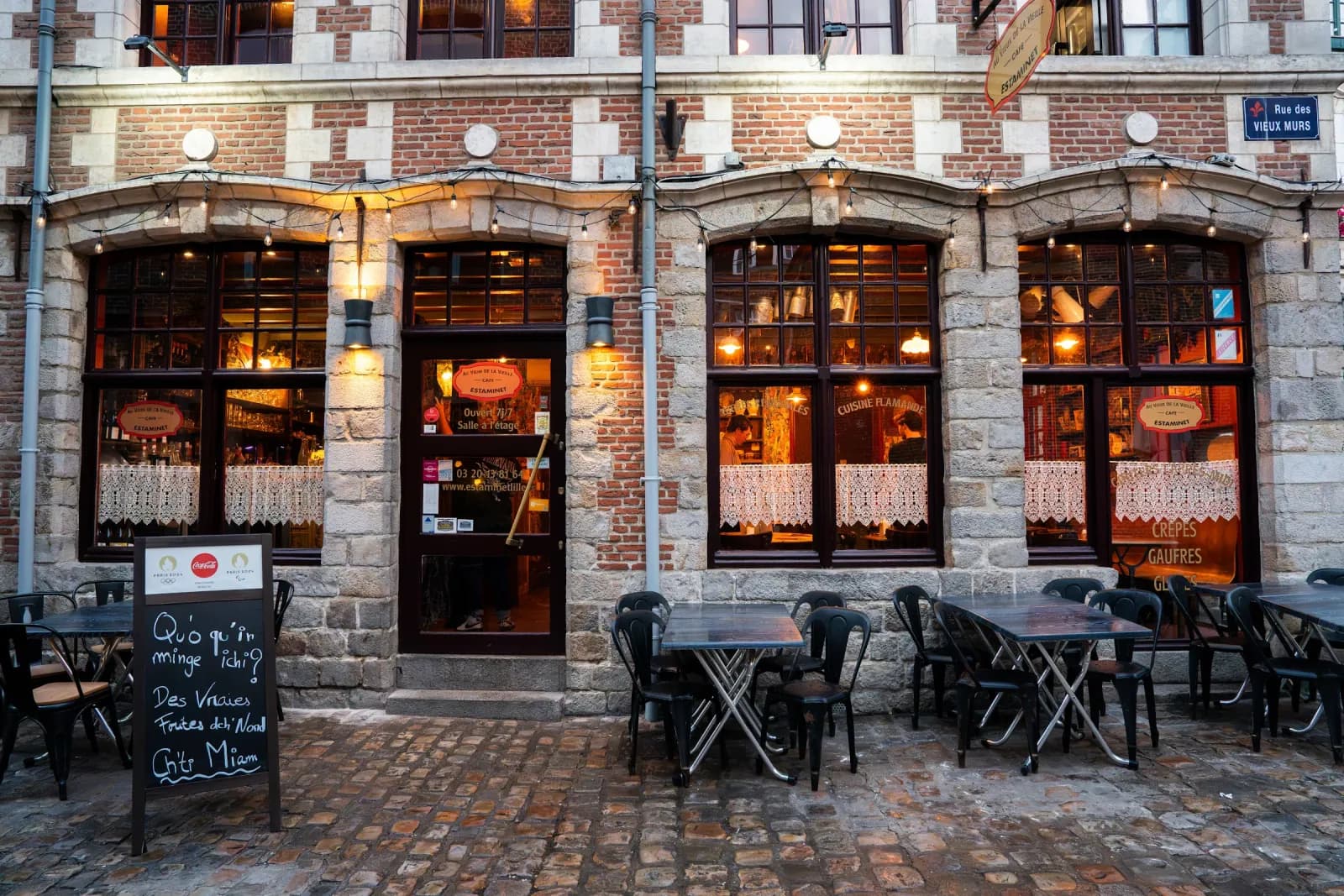
Which estaminet to choose in Lille?
Eight houses, two squares, one street, three villages. This comparison covers only ours, and says so: here is what sets them apart, to choose fast and walk through the right door.
Read more