Drinking a northern beer in an estaminet
Blonde, amber, brown, de garde or abbey: how to read the counter, and what to drink with what.
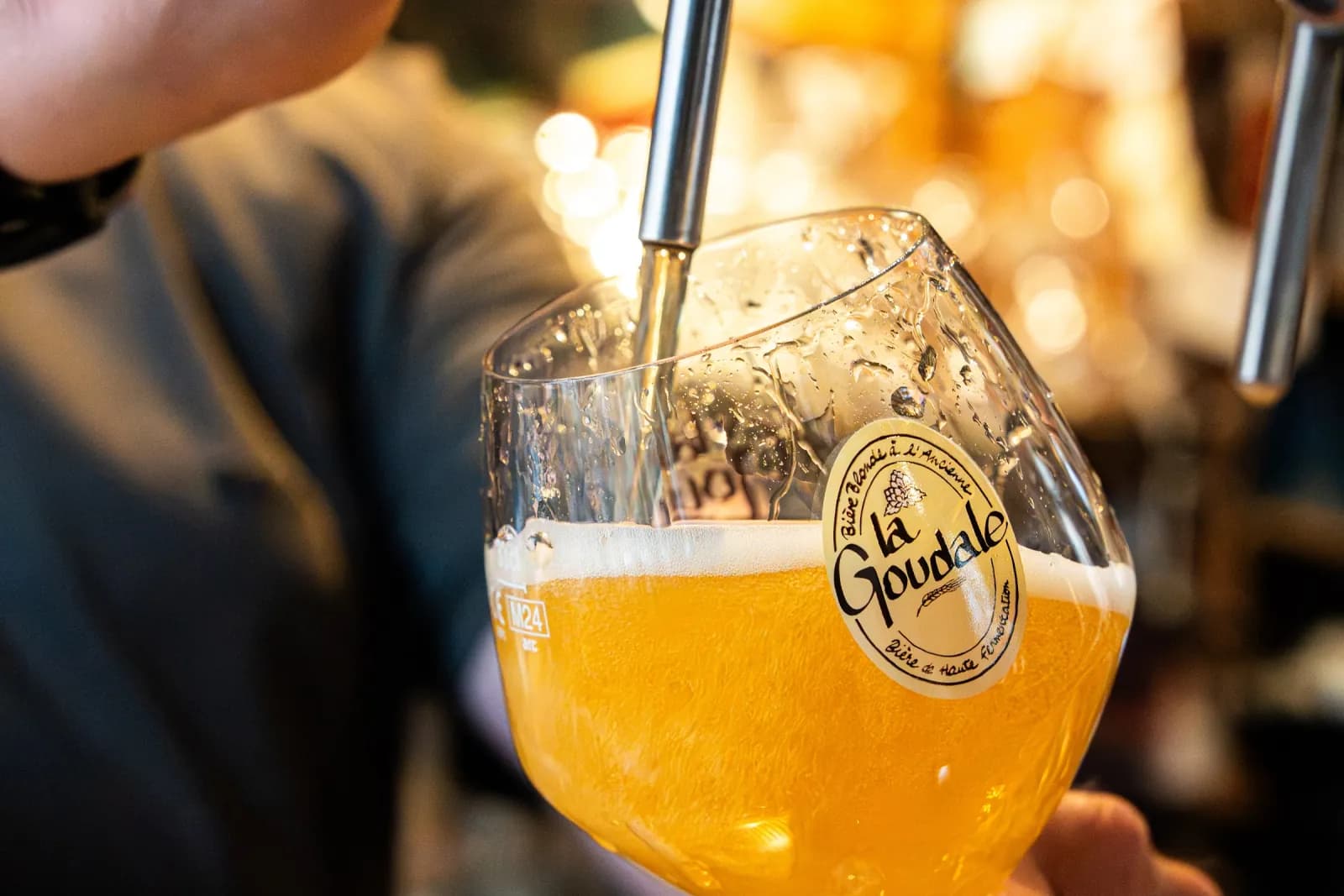
Our own photograph
Published on September 4, 2026
A region of brewers
The North brewed long before it mined. Every sizeable farm had its brewery, every village its brewer, and the unsafe water of Flanders was drunk as beer from the Middle Ages on. Dozens of breweries remain today, from large family houses to micro-breweries opened in the last ten years. The counter of an estaminet is first of all a map of the surroundings.
What is a bière de garde?
The beer farms brewed in winter, when it was cold enough to work cleanly, and kept in the cellar until the work in the fields. It is stronger, rounder, maltier than the seasonal beer, and it has aged a few months before being drunk. It is the most typical beer of the North: Goudale, 3 Monts and Choulette are all bières de garde, and they are the ones on our counters.
How do you read the counter?
Blonde, light, to start or with a welsh. Amber, maltier, with dishes in sauce and with maroilles. Brown, with the carbonade and with the speculoos dessert. White, in summer, with mussels. Tripel or abbey beer to finish, when you are not driving. And across the border, twenty kilometres away, the whole of Belgium. Every house has its taps and its bottles: ask what is on tap that day.
What to drink with what?
Carbonade: a brown or an amber, the one used in the pot if it is offered. Cheddar welsh: a blonde. Maroilles welsh: an amber. Mussels: a white or a light blonde. Potjevleesch: a blonde from the coast. Sugar tart: a mild brown, or a chicory coffee.
And genièvre?
It is the grain spirit of Flanders, distilled in Houlle or Wambrechies, a few kilometres from Lille. Drunk neat and iced as a digestif, or poured into the morning coffee: that is the bistouille, the miners' and dockers' drink. An estaminet without genièvre at the counter is not quite an estaminet. You will find it at the counter of Au Petit Vieux, place aux Oignons, where people come for the beer first, and in every house of the guide to Lille's estaminets.
Eight houses, from old Lille to the sea
Long tables, slow-cooked dishes, welsh, a counter, the seaside: pick yours by mood, the menu and prices are on every page.
See our housesAlso worth reading
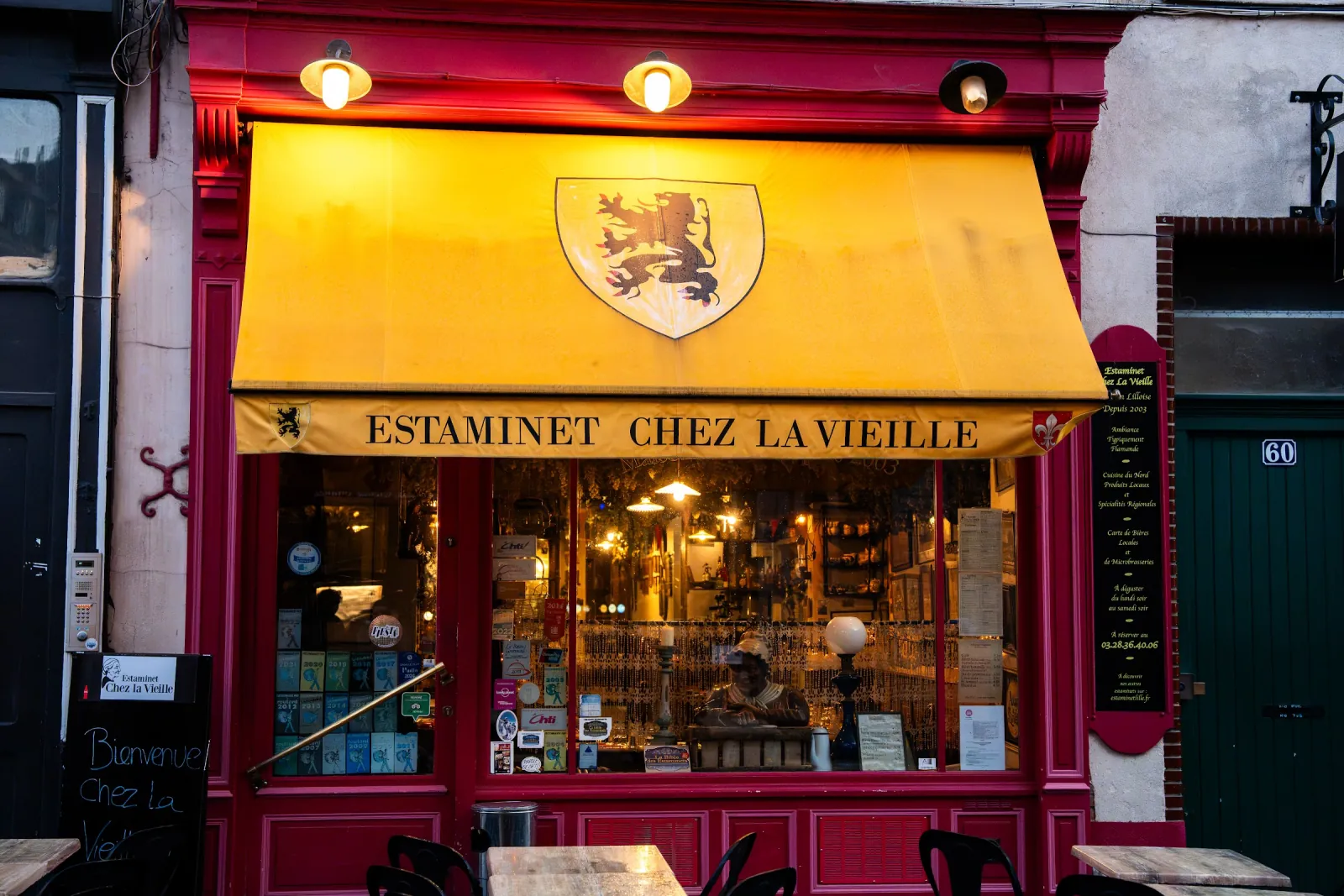
Rue de Gand: three estaminets, three ways to eat Flemish
A cobbled street climbing towards the porte de Gand, brick fronts, and three of our houses a few dozen metres apart. They do not serve the same thing, and that is no accident.
Read more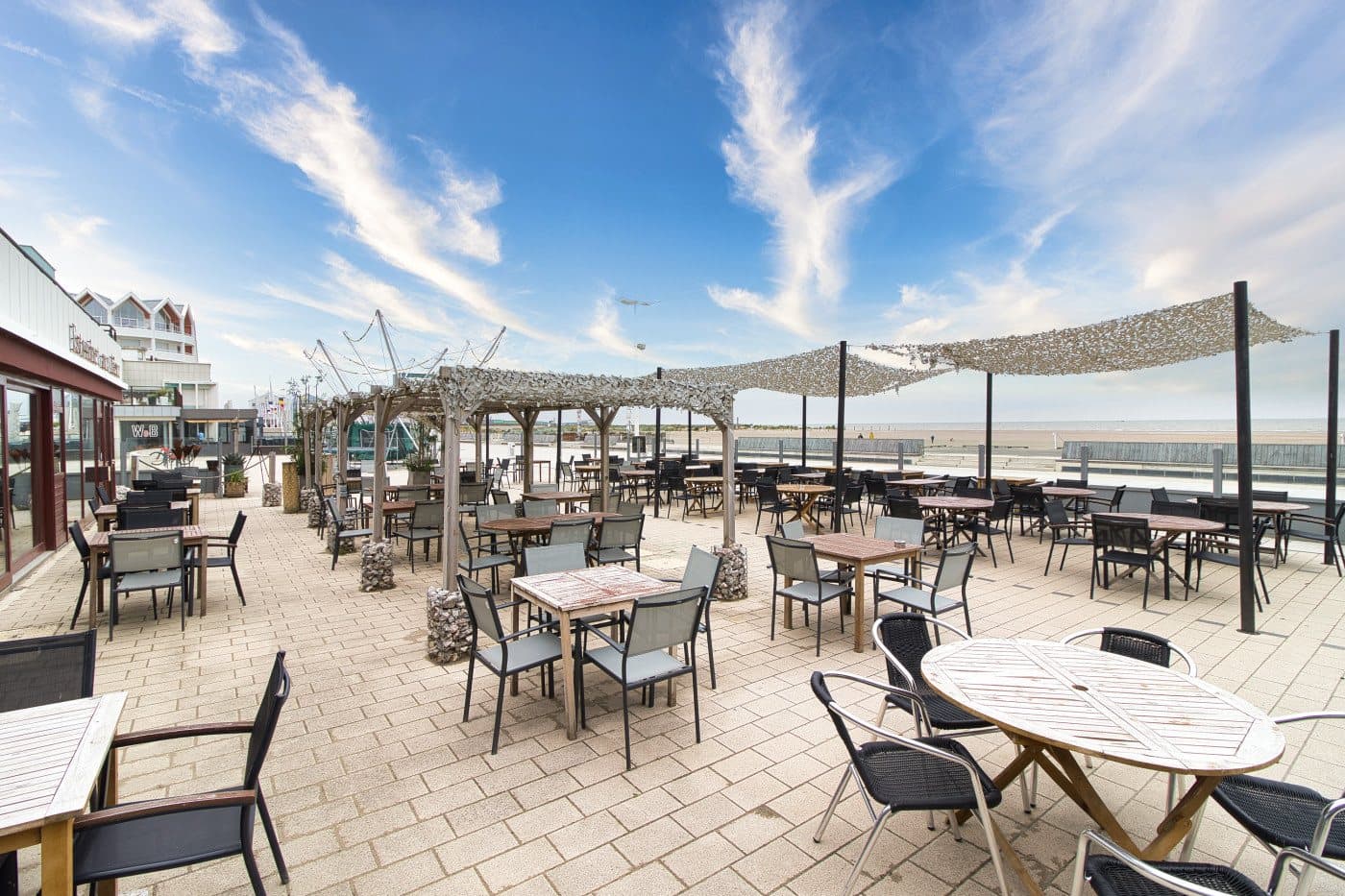
Saint Martin, the children's festival of the North
A hollowed-out beetroot, a candle inside, and children singing in the street at nightfall. This is the 11 November festival nobody talks about.
Read more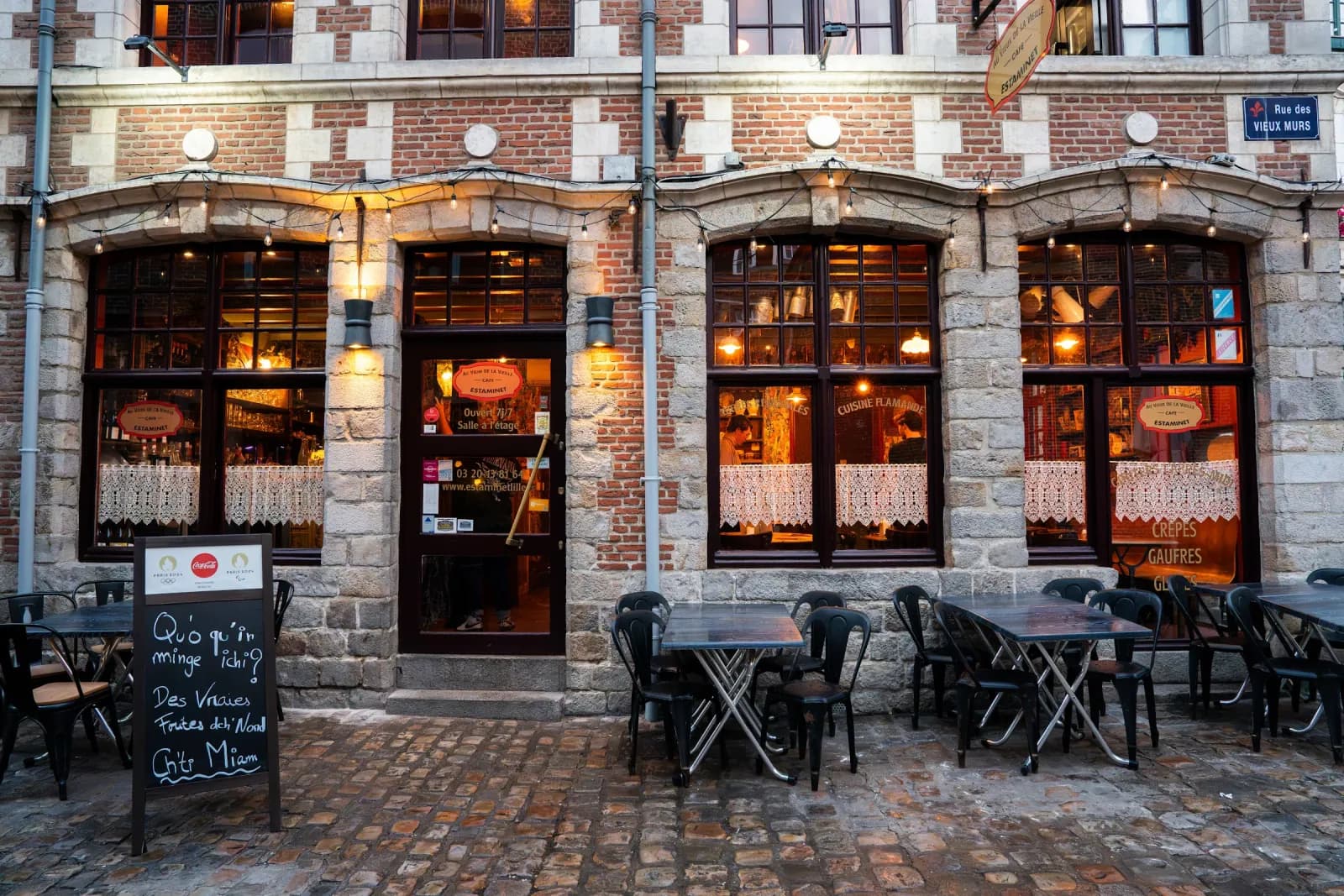
Which estaminet to choose in Lille?
Eight houses, two squares, one street, three villages. This comparison covers only ours, and says so: here is what sets them apart, to choose fast and walk through the right door.
Read more